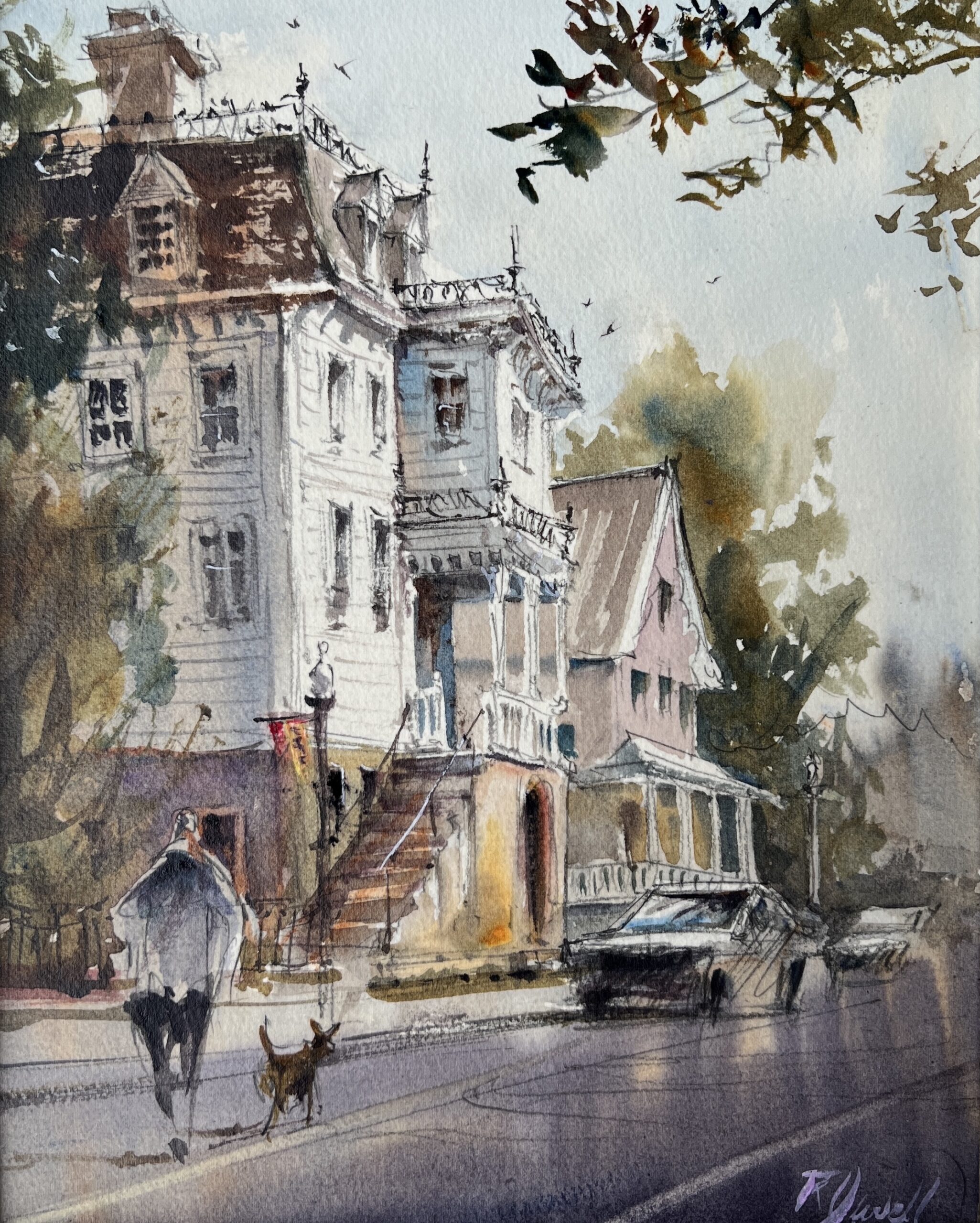
Russell Jewell Ed.D., AWS, NWS, TWSA. (2026)
Workshop starts Sunday, May 17 at noon ending Tuesday May 19, 5:00 PM
Jewell’s workshop is geared towards independent personal painting development; it is open to all levels of artists. Participants will learn how to; Approach and solve their own concerns in watercolor, regardless of their artistic ability. Participants will see their own artwork in a different light - a light that will allow them to move further down their path towards success.
Tuition: $400
Capturing light in the watercolor landscape
Request a critique, learn for a day. Critique your quest, learn for a lifetime.
This is a painting workshop that ultimately explores watercolor through a problem solving approach. Russelljewell.com
This workshop is an effort to give participants not only mental information, but multiple, physical and visual problem-solving approaches that can be applied specifically to capturing light in the landscape of a watercolor painting. Jewell will teach participants how to see into the future of their painting before they paint it, thus, allowing painters to see the desired target painting and possess the confidence to go for it. Russell Jewell’s primary medium is watercolor but his techniques come from his doctorate in art education and his 35+ years of teaching art to students.
Jewell has been honored to participate as a member of the Plein Air Convention Expo Faculty. Jewell has a US patent on a his own plein air viewfinder and has won Best Watercolor twice in Maryland’s Plein Air Easton. He is a signature member of American Watercolor and National Watercolor Societies, as well as, the Transparent Watercolor Society of America. In 2025 Jewell won Best of Show in Edisto Plein Air and Best Light in Mountain Maryland.
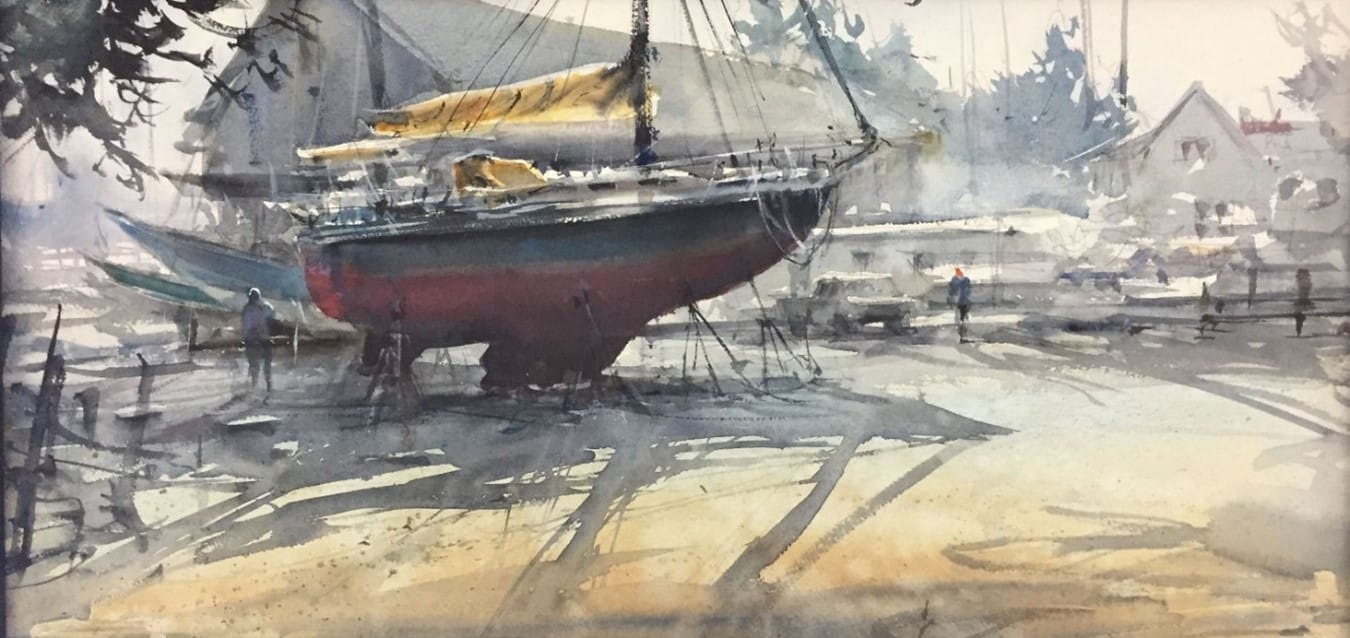
Russell Jewell’s Light on the Landscape Workshop Suggested Supplies:
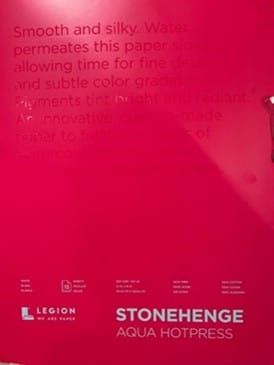
Watercolorist should feel free to bring whatever materials you normally use to paint. In regards to paper, I personally use Arches and Stonehenge. I will be demonstrating on Stonehenge Aqua Hot Press 140#.
My basic palette includes: Holbein and Daniel Smith, Pyrol Transparent Orange, Quinacridone Gold, Quinacridone Sienna, Hansa Yellow Light, Raw Umber, Lunar Black, Prussian Blue, Ultramarine Blue, Cobalt Blue, Manganese Blue, Cerulean Blue, Lilac, Neutral Tint, Juane Brilliant #1, Titanium White. If you are new to watercolor or you would like to paint with a “Limited Palette” (remember, less colors = less confusion) you can purchase only the seven boldfaced paints listed.
I will have images from which to paint but feel free to provide your own photos of which you might have interest to paint, preferably, photos with high contrast.
I would prefer you have your own sketchbook for both notes and sketches as we go. I prefer a mechanical lead pencil that carries #9 thickness of lead for drawing. I also prefer an eraser which is encased like a pen that clicks to produce more eraser length.
I will introduce you to Caren D’ Ache Neo Color II water-soluble crayons. We will use these crayons as a tool that aids our design. We will not use them on the final watercolor painting. These crayons run about $15.00 for a 12 pack, however, I break them in half prior to using them, therefore, you could split the cost with someone, break them, and still have all you need.
Supplies
Paints: I use various brands of watercolors (leaning into Holbein these days, they are a bit more robust and opaque);
Cool Colors: Ultramarine, Cobalt, Cerulean, Neutral Tint or Payne’s Grey, Manganese, Cobalt Turquoise, Warm Colors: Quinacridone Gold, Raw Sienna, Jaune Brilliant #1, Transparent Pyrol Orange, Hansa Yellow Light, Lilac, Quinacridone Sienna.
If you want to have a “limited palette”, which will make painting easier, then you could just go with the bold-faced colors listed above (Only 8 colors! More colors = more confusion) Feel free to add a titanium white watercolor for final touches and Lunar Black.
Papers: Lately, I have really enjoyed using Stonehenge Aqua Hotpress, 140#, Watercolor Block 12x16. A watercolor block is 12 pages pre-glued to a stiff surface. You can paint without wrinkles and simply bull-dog clip the entire block to your easel. You can put tape around to mask off various standard sizes. I have also used hot press, cold press, and rough, Arches and/or Saunders Waterford 140#. However, in competitions I use 300# cold press Arches which will really take a beating. I also use and would suggest you have a small sketchbook (6x9 or so) with heavy paper for sketching and thumbnail drawings.
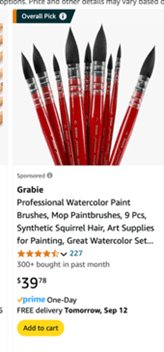
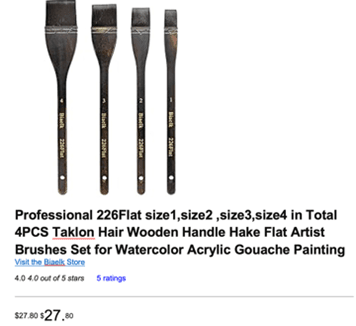
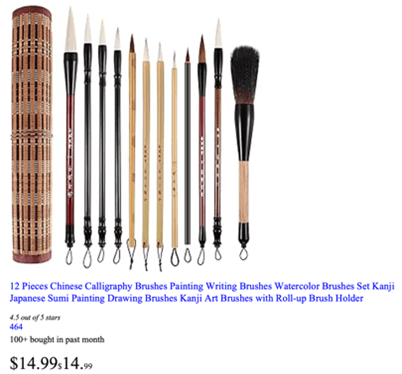
Brushes: I use: #4 Squirrel mop brush (you might want to check out Grabie Brushes (synthetic) they have a 9 brush pack that is affordable, a 1/4” Striper (I have Silver Black Velvet, it’s cheap but a must for me), #10 or #12 Round Synthetic (I have Escoda). I also use some of the inexpensive Chinese calligraphy brushes. Other than your mop brushes you need brushes that spring back and come to a sharp point.